What to Look For When Choosing a Dubai Dune Buggy
Riding a dune buggy across Dubai's red sand desert is one of the most exciting ways to see the landscape. The dunes rise and fall fast, and the vehicle needs to handle steep climbs, soft patches, and sudden dips. Picking the right buggy means understanding the machine, the terrain, and your own comfort level. This article walks through the key steps to help you decide, whether you are a first-timer or someone who has ridden before.
1. Understand the Terrain and What It Demands
Dubai's desert is not a flat sandbox. The dunes near Al Ain, the Lahbab desert, and the areas around Dubai's outskirts all have different sand textures and slope angles. Soft sand, called “fluff,” can swallow a buggy that lacks enough power or tyre grip. Harder packed dunes let you carry more speed but require a vehicle with good suspension to absorb the bumps. Before you think about engine size or colour, picture the kind of ride you want. A gentle cruise over rolling dunes needs a different machine than a fast, bouncing run over steep faces. Most rental operators use buggies that are built for general desert use, but the range still varies in tyre type, wheelbase, and power delivery.
2. Check the Engine Power and Type
Dune buggies come with either a petrol engine or a diesel engine. Petrol engines are lighter and rev higher, which helps on steep climbs. Diesel engines give more torque at low speed but add weight. For desert dunes, the extra weight can make a buggy sink in soft sand. A petrol engine in the 800cc to 1000cc range is a common sweet spot for most riders. It gives enough acceleration to crest a dune without bogging down. If you are sharing the ride with a passenger, a slightly larger engine helps maintain speed on long uphill sections. Ask about the engine's cooling system too. Desert heat can push an engine hard, and an air-cooled motor needs regular stops to avoid overheating. A liquid-cooled engine handles longer runs better but is heavier. Neither is wrong; it depends on how long you plan to ride and how aggressively you drive.
3. Evaluate the Suspension and Chassis
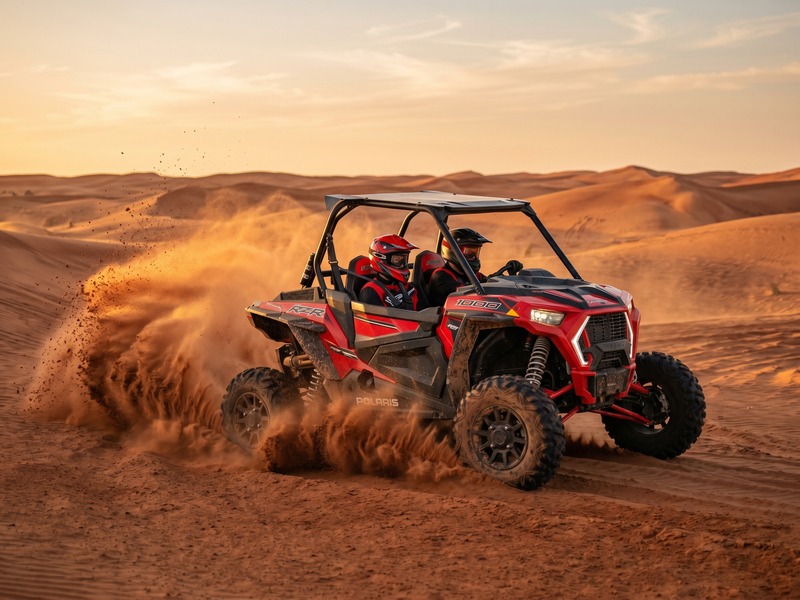
The desert floor is unpredictable. You will hit small dips, sudden drop-offs, and uneven ridges. A buggy with poor suspension will jolt your spine and make control harder. Look for a buggy with independent suspension on all four wheels. This lets each wheel move up and down separately, keeping the chassis more level when one side hits a bump. The wheel travel, measured in inches, tells you how much the suspension can compress before bottoming out. Around 8 to 10 inches of travel is enough for most recreational riding. More travel gives a smoother ride over big bumps but can make the buggy feel less stable on flat sections. The chassis should be a welded steel frame with a low centre of gravity. A lower frame reduces the chance of tipping when you take a sharp turn on a dune slope. Avoid buggies that look like modified golf carts with a roll cage tacked on; a purpose-built dunebuggy has a frame designed from the ground up for off-road stress.
4. Inspect Tyres and Wheel Setup
Tyres are the only contact point between the buggy and the sand. Standard road tyres will dig into soft sand and get stuck. Desert buggies use wide, low-pressure tyres with a tread pattern that clears sand quickly. The tyre width, usually between 23 and 28 inches, spreads the weight over a larger area, helping the buggy float on top of the sand. The air pressure matters too. For deep sand, you want the tyres slightly deflated to increase the footprint. Some buggies come with beadlock rims that keep the tyre seated even at very low pressure, which is a useful feature if you plan to ride in really soft conditions. Check that the rear tyres are wider than the front. That extra grip at the back helps push the buggy up dunes without spinning out. If the tyres look worn or have uneven wear, the buggy may not handle predictably on loose sand.
5. Test the Steering and Braking Feel
Steering a dune buggy in sand is different from steering on pavement. The front wheels tend to skid sideways when you turn sharply, so you need a steering system that gives feedback through the wheel. A rack-and-pinion setup with a short turning radius works best for dunes. Power steering is common on larger buggies and reduces arm fatigue, but it can mask the feel of the sand. Try turning the wheel while the buggy is stationary. If it feels too loose or has excessive play, the linkage may be worn. Brakes are equally important. Desert riding often requires quick stops at the top of a dune where the drop on the other side is sudden. Disc brakes on all four wheels provide the most consistent stopping power. A foot-operated brake pedal should feel firm, not spongy. If the buggy has a handbrake, it is usually for parking, not for stopping during a ride. Test both before you commit to a rental or purchase.
6. Consider Safety Features and Your Own Comfort
A roll cage is essential. It should be a welded metal structure that surrounds the driver and passenger, with padding on the bars near your head. Seat belts should be a four-point or five-point harness, not a simple lap belt. A five-point harness keeps you firmly in the seat during sudden movements. The seat itself should have good lumbar support and be adjustable if multiple people will drive. Look for a kill switch, often a tether that attaches to your clothing. If you are thrown from the buggy, the tether pulls the switch and cuts the engine. This prevents the buggy from continuing without a driver. For comfort, check that the pedals are within easy reach and that the steering wheel does not hit your knees. If you wear goggles or sunglasses, make sure the buggy has a windscreen or at least a helmet with a visor, because sand flies up fast. Many riders prefer an open-face helmet for better visibility. If you plan to ride in the middle of the day, bring plenty of water and wear light, long-sleeved clothing to protect from the sun.
7. Factor in the Rental or Purchase Terms
If you are renting a buggy for a day trip, ask about the duration of the ride and the route. Some operators include a guide who leads the group through a set path; others let you ride freely within a marked area. The condition of the buggy matters more than the brand name. A well-maintained older buggy often performs better than a newer one that has been abused. Check the tyres, the engine start, and the steering before you set off. If you are buying a buggy for personal use, consider the availability of spare parts in Dubai. Some brands have local distributors, while others require importing parts, which can take weeks. The Dune Buggy Adventure official site lists examples of the kind of vehicles used in the desert, which gives you a reference point for what a typical desert-ready buggy looks like. Use that as a baseline when comparing other options.
8. Think About the Number of Passengers
Dune buggies come as single-seat, two-seat, and sometimes four-seat models. A two-seat buggy is the most common for desert rides because it balances power and weight. If you ride alone, a single-seat buggy is lighter and more nimble, but it offers less stability at speed. A four-seat buggy is heavier and harder to control on steep dunes, especially if only the driver is on board. For a group outing, two two-seat buggies often work better than one large buggy because they spread the weight and let each rider control their own experience. If you are the only driver and you carry a passenger, make sure the passenger seat has its own harness and grab handles. The passenger's weight shifts the centre of gravity, so the buggy will handle differently than when you ride alone. Take a few turns in an open area to get a feel for the change before you hit the big dunes.
9. Look at the Buggy's Maintenance History
A dune buggy that looks clean on the outside may have hidden issues. Ask about the last service date, especially for the engine oil, air filter, and brake fluid. Sand gets into everything, and a clogged air filter can starve the engine of air, causing it to run poorly. The air filter should be a washable foam type that is cleaned after every few rides. Check the drive belt if the buggy uses a belt-driven transmission. A worn belt can snap under load, leaving you stranded on a dune. The battery terminals should be clean and the wiring should be secured away from moving parts. If the buggy has been used in saltwater areas, check for corrosion on the metal parts. A rusty frame may look superficial, but it weakens the structure over time. The Dune Buggy Adventure official site gives a sense of the attention to detail that goes into properly maintained vehicles. Use that as a mental benchmark when you inspect any buggy.
10. Trust Your Own Test Ride
No amount of research replaces the feel of an actual ride. If possible, take the buggy for a short spin on a flat, safe area before you commit to a long route or a purchase. Listen for unusual engine noises, feel for vibration in the steering wheel, and check how the brakes respond at low speed. A buggy that feels right on a short test will almost always feel better on the dunes. Pay attention to how the gear shift moves. A stiff or vague shifter can make driving frustrating. The clutch should engage smoothly without jerking. If the buggy has a manual transmission, practice shifting up and down a few times. For automatic buggies, make sure the transmission shifts at the right rpm. A buggy that hesitates or revs too high before shifting may have a worn transmission.
Choosing the right Dubai dune buggy comes down to matching the machine to the terrain and your own riding style. Focus on the engine, suspension, tyres, and safety features. Check the maintenance and test the controls. Once you have found a buggy that feels solid and responsive, you can enjoy the desert with confidence.